Literature

31 Android Top Free — Opengl Es

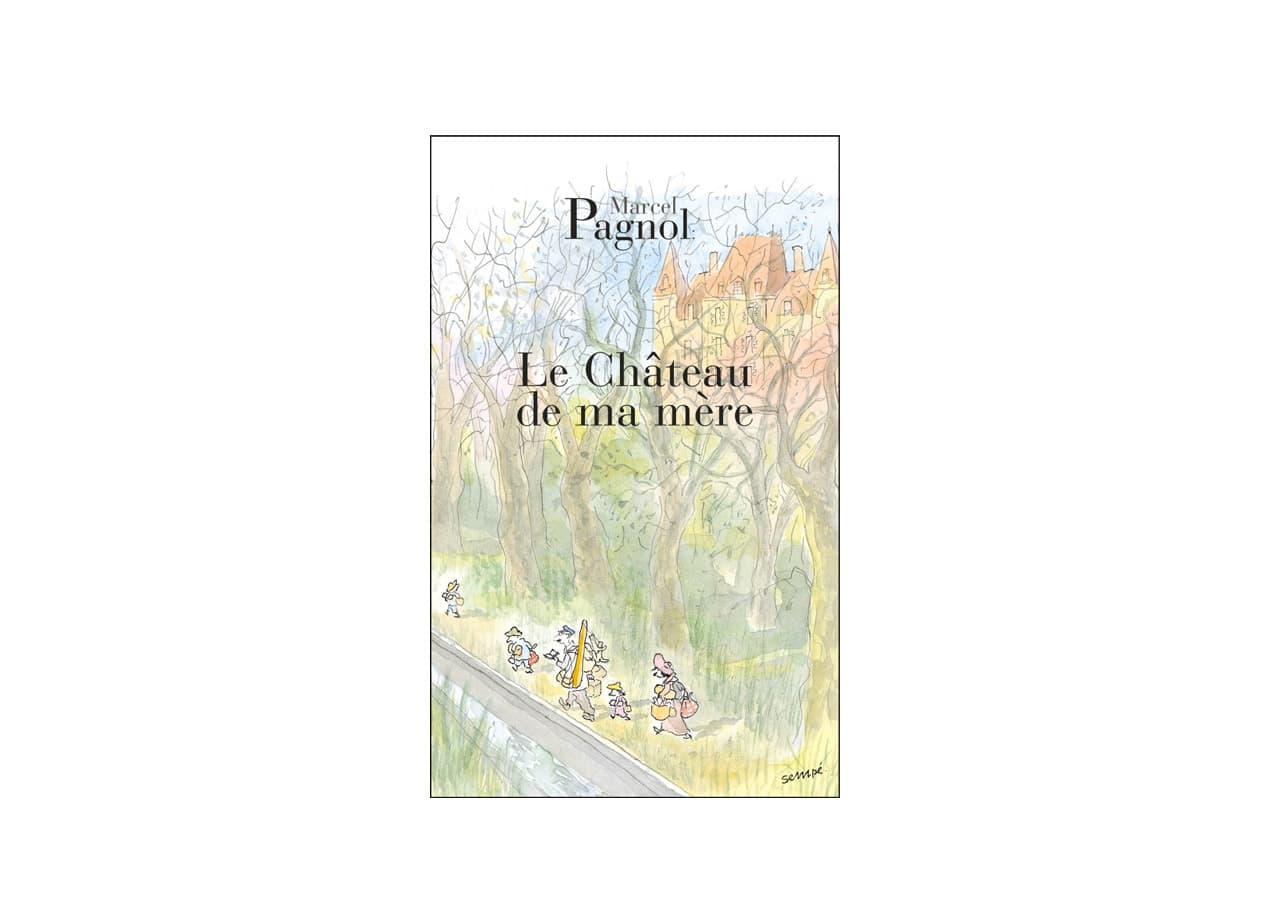
The most beautiful book on child friendship: one morning while hunting in the hills, Marcel meets the little peasant, Lili des Bellons. His vacations and his whole life will be illuminated by it.

The most beautiful book about childhood friendship.

Summary

One year after La Gloire de mon père (My Father’s Glory), Marcel Pagnol thought he would conclude his childhood memories with this Château de ma mère (1958), the second part of what he considered as a diptych, ending with the famous scene of the ferocious guardian frightening the timid Augustine. Little Marcel, after the family tenderness, discovered friendship with the wonderful Lili, undoubtedly the most endearing of his characters. The book closes with a melancholic epilogue, a poignant elegy to the time that has passed. In it, Pagnol strikes a chord of gravity to which he has rarely accustomed his readers.

Hey friend! “
I saw a boy about my age looking at me sternly. You shouldn’t touch other people’s traps,” he said. “A trap is sacred!
” 

– “I wasn’t going to take it,” I said. “I wanted to see the bird.” 

He approached: “it was a small peasant. He was, brown, with a fine Provencal face, black eyes and long girlish lashes.”

Buy online

You will also like:

31 Android Top Free — Opengl Es

OpenGL ES 3.1 is a major milestone in Android graphics, introducing desktop-class features like compute shaders to mobile devices. Supported since Android 5.0 (Lollipop), it bridges the gap between mobile and desktop graphics by allowing GPUs to handle general computing tasks alongside standard 3D rendering. Core Features of OpenGL ES 3.1

OpenGL ES 3.1 on Android: A Technical Overview for High-Performance Graphics

Abstract

OpenGL ES 3.1 represents a significant evolution in mobile graphics APIs, introducing compute shaders, indirect draw commands, and enhanced texture functionality. On the Android platform, it bridges the gap between traditional rendering pipelines and modern GPU-compute workflows. This paper examines the core features of OpenGL ES 3.1, its implementation landscape on Android devices, and provides practical guidelines for developers aiming to leverage its capabilities in real-time applications such as games, AR/VR, and image processing. opengl es 31 android top

Why it's useful: You can offload heavy mathematical calculations—like physics simulations, image processing, or complex particle systems—to the GPU's thousands of cores without needing a separate API like OpenCL. OpenGL ES 3

  • Use Cases: Particle system physics (calculating positions without CPU intervention), culling objects (visibility determination), image processing (blur, edge detection), and bone animation (GPU skinning).
  • Work Groups: Compute shaders execute in work groups. You define a grid (e.g., glDispatchCompute(x, y, z)) and the GPU distributes the workload across its cores.

OpenGL ES 3.1 on Android: A Comprehensive Guide OpenGL ES 3.1 is a cornerstone of modern mobile graphics, bridging the gap between mobile and desktop-class rendering capabilities. For Android users and developers, this API represents a major leap in visual fidelity and computational efficiency. Key Features of OpenGL ES 3.1 culling objects (visibility determination)
OpenGL ES 3.1 is a major milestone in Android graphics, introducing desktop-class features like compute shaders to mobile devices. Supported since Android 5.0 (Lollipop), it bridges the gap between mobile and desktop graphics by allowing GPUs to handle general computing tasks alongside standard 3D rendering. Core Features of OpenGL ES 3.1

OpenGL ES 3.1 on Android: A Technical Overview for High-Performance Graphics

Abstract

OpenGL ES 3.1 represents a significant evolution in mobile graphics APIs, introducing compute shaders, indirect draw commands, and enhanced texture functionality. On the Android platform, it bridges the gap between traditional rendering pipelines and modern GPU-compute workflows. This paper examines the core features of OpenGL ES 3.1, its implementation landscape on Android devices, and provides practical guidelines for developers aiming to leverage its capabilities in real-time applications such as games, AR/VR, and image processing.

Why it's useful: You can offload heavy mathematical calculations—like physics simulations, image processing, or complex particle systems—to the GPU's thousands of cores without needing a separate API like OpenCL.

OpenGL ES 3.1 on Android: A Comprehensive Guide OpenGL ES 3.1 is a cornerstone of modern mobile graphics, bridging the gap between mobile and desktop-class rendering capabilities. For Android users and developers, this API represents a major leap in visual fidelity and computational efficiency. Key Features of OpenGL ES 3.1