Microsip Api Better [portable]
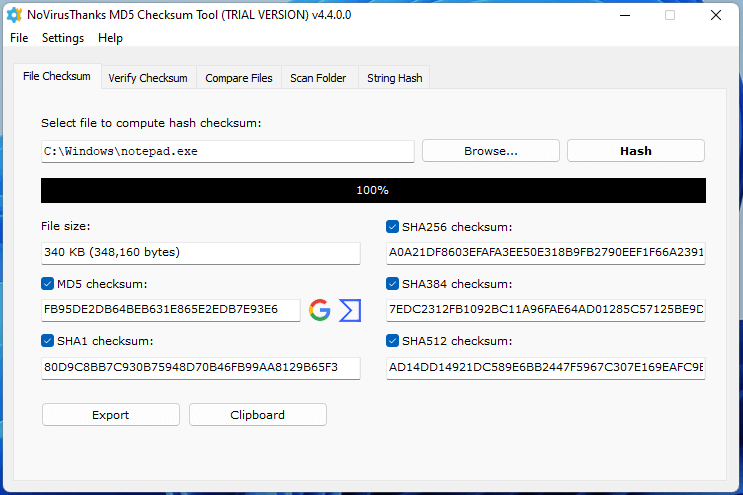
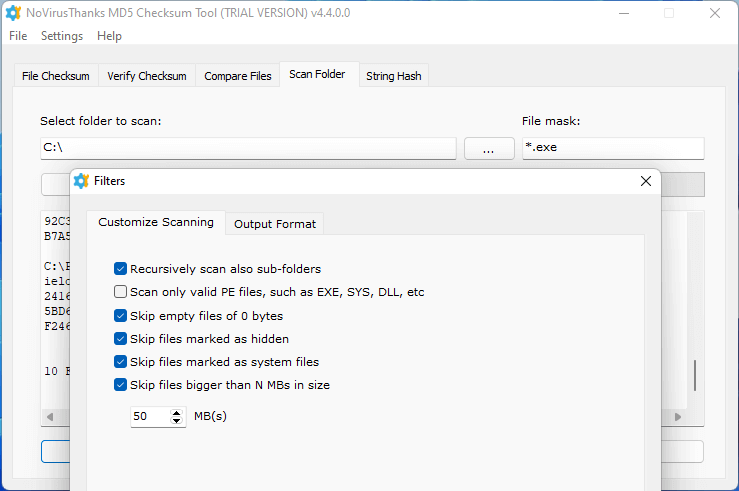
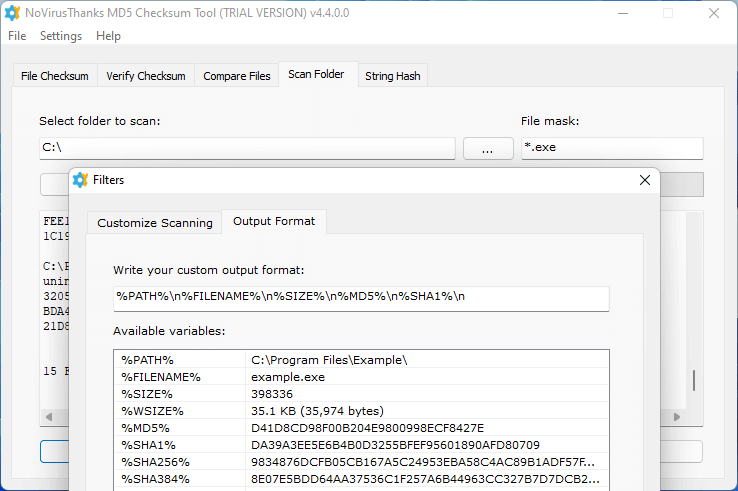
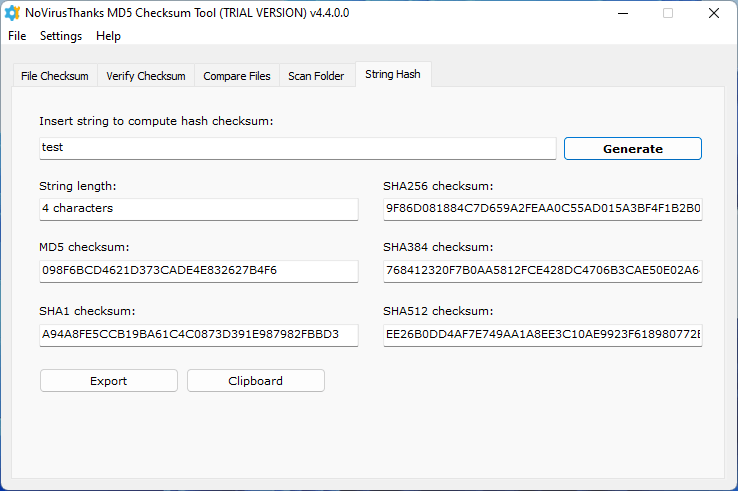
MD5 Checksum Tool is a smart and easy to use Windows OS application designed to allow
users to generate the file checksum
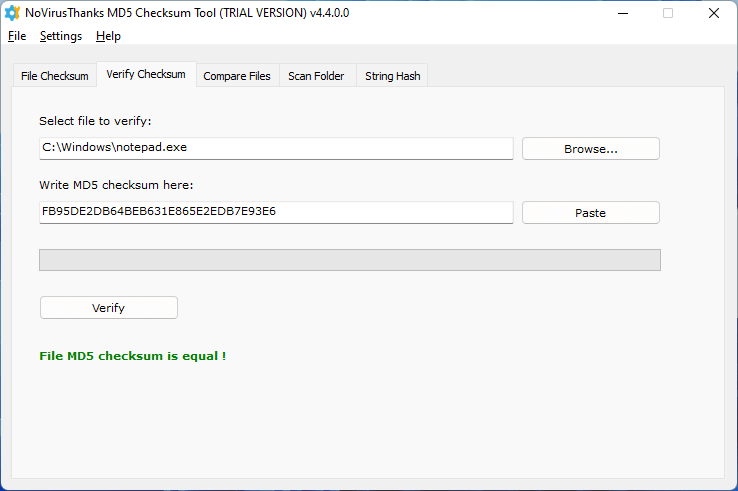
(MD5/SHA hash) of a file or string. It can be particularly useful to check if an executable (.exe) file is legit, in other words,
if it is the official release
from the offical author. The file and string hashing algorithms supported are
MD5, SHA1, SHA256, SHA384 and SHA512.
For Windows 7 SP1, 8, 8.1, 10, 11 (32/64-bit)
Microsip Api Better [portable]
To effectively use or "make better" the MicroSIP experience, particularly through automation or API-like functionality, you have two main paths: utilizing the official Provisioning REST API for configuration or leveraging third-party Python wrappers for control. 1. Official Provisioning API
If you are looking to automate the application itself (e.g., triggering calls from another app), developers often use the microsip-api available on PyPI. Functionality
While MicroSIP does not offer a traditional REST API, it provides a robust Command-Line Interface (CLI) event-driven triggers microsip api better
Implementing a Robust MicroSIP API: Beyond the Basics
MicroSIP is a popular, lightweight VoIP softphone for Windows. While it excels in simplicity and low resource usage, it lacks a native REST API or a modern SDK often found in enterprise-grade softphones (like Zoiper or Bria). Out of the box, MicroSIP offers a SimpleCLI for basic call initiation, but for developers requiring call control, status monitoring, and CRM integration, a "better" approach is required.
MicroSip is a popular open-source SIP softphone for Windows, valued for its lightweight footprint and high performance. However, for developers and businesses looking to build integrated communication workflows, the MicroSip API—primarily based on command-line arguments and simple Windows messages—represents both a hurdle and an opportunity. To move from a basic softphone to a "better" API experience, one must focus on three pillars: deeper integration, modern event handling, and cross-platform accessibility. To effectively use or "make better" the MicroSIP
Step 1: Enable the Remote Control Interface
MicroSIP supports a configuration setting for remote control. You must enable AllowRemoteControl=1 in the microsip.ini configuration file. This allows external applications to send window messages to the MicroSIP process.
If you want, I can:
In conclusion, making the MicroSip API better is not about rewriting the softphone, but about opening the door for two-way communication. By adopting modern web protocols, exposing deeper PJSIP functionalities, and moving toward a service-based architecture, MicroSip can evolve from a simple utility into a powerful, programmable backbone for enterprise communications. Such improvements would bridge the gap between a standalone tool and a fully integrated telephony ecosystem.
throw new Exception("MicroSIP is not running.");
To effectively use or "make better" the MicroSIP experience, particularly through automation or API-like functionality, you have two main paths: utilizing the official Provisioning REST API for configuration or leveraging third-party Python wrappers for control. 1. Official Provisioning API
If you are looking to automate the application itself (e.g., triggering calls from another app), developers often use the microsip-api available on PyPI. Functionality
While MicroSIP does not offer a traditional REST API, it provides a robust Command-Line Interface (CLI) event-driven triggers
Implementing a Robust MicroSIP API: Beyond the Basics
MicroSIP is a popular, lightweight VoIP softphone for Windows. While it excels in simplicity and low resource usage, it lacks a native REST API or a modern SDK often found in enterprise-grade softphones (like Zoiper or Bria). Out of the box, MicroSIP offers a SimpleCLI for basic call initiation, but for developers requiring call control, status monitoring, and CRM integration, a "better" approach is required.
MicroSip is a popular open-source SIP softphone for Windows, valued for its lightweight footprint and high performance. However, for developers and businesses looking to build integrated communication workflows, the MicroSip API—primarily based on command-line arguments and simple Windows messages—represents both a hurdle and an opportunity. To move from a basic softphone to a "better" API experience, one must focus on three pillars: deeper integration, modern event handling, and cross-platform accessibility.
Step 1: Enable the Remote Control Interface
MicroSIP supports a configuration setting for remote control. You must enable AllowRemoteControl=1 in the microsip.ini configuration file. This allows external applications to send window messages to the MicroSIP process.
If you want, I can:
In conclusion, making the MicroSip API better is not about rewriting the softphone, but about opening the door for two-way communication. By adopting modern web protocols, exposing deeper PJSIP functionalities, and moving toward a service-based architecture, MicroSip can evolve from a simple utility into a powerful, programmable backbone for enterprise communications. Such improvements would bridge the gap between a standalone tool and a fully integrated telephony ecosystem.
throw new Exception("MicroSIP is not running.");