Amiga Workbench 13 Adf //top\\ [FRESH]
Amiga Workbench 1.3 ADF: The Digital Heart of a Revolution
Introduction: More Than Just a Disk
In the pantheon of computing history, few operating systems evoke the same blend of nostalgia, technical admiration, and raw creative energy as Commodore’s Amiga Workbench 1.3. For millions of users in the late 1980s and early 1990s, the iconic blue-and-orange screen (or the more professional grey 3D look of later versions) wasn't just a launcher—it was a portal to a computer that was a decade ahead of its time. Today, the Amiga Workbench 1.3 ADF (Amiga Disk File) serves as a digital time capsule, allowing modern enthusiasts, retro gamers, and historians to boot up a 34-year-old operating system on emulators like WinUAE, FS-UAE, or even original hardware with a Gotek floppy emulator.
Unlike modern OSes that live on a hard drive, the Amiga 500 was primarily a floppy-disk driven machine. Workbench 1.3 was the "desktop environment." When you booted an Amiga without a game disk, you were greeted by a CLI (Command Line Interface) window and a disk icon representing DF0:. amiga workbench 13 adf
Hardware Restoration: It is the most common OS to pair with a physical Amiga 500 restoration. Amiga Workbench 1
Many single-disk "bootable Workbench" copies omit Extras. A complete set is three disks: Workbench, Extras, Fonts. The Emulator: WinUAE
The ROM: kick13
- The Emulator: WinUAE
- The ROM:
kick13.rom (Kickstart 1.3)
- The Disk:
Workbench1.3.adf
By combining a legal Kickstart ROM, a verified ADF file, and WinUAE, you can have a perfect digital Amiga 500 running on your laptop within ten minutes. Spend an hour exploring the Prefs drawer. Run the Clock utility. Listen to the emulated floppy drive clicks.
Amiga Workbench 1.3 is widely regarded by retrocomputing enthusiasts as the definitive "Classic" OS for Original Chip Set (OCS) Amigas like the A500 and A2000

 OnlyOne Live
 OnlyOne Live Plus
 OnlyOne Meet
 OnlyOne TouchMe
 OnlyOne TouchMe Plus
 OnlyOne TouchMeet
 OnlyOne Maxi
 OnlyOne Maxi Plus
 OnlyOne Maxi Meet
 OnlyOne UltraWide
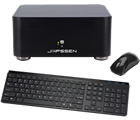 MicroBox
 MicroBox Plus
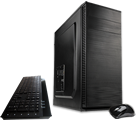 SuperFast
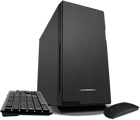 UltraFast
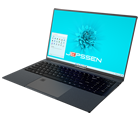 HandyStation Premium
 HandyStation Pro AI
 OverSense
 OverSense Plus
 OverSense Maxi
  OverSense Maxi Plus
 PAN 10 Maximo
 PAN Accessories
 MediaBox 4K
 MediaBox 4K Automation
 DigitalBox 4K AI
 Media Peripherals
 Droid LED Projector
 Droid LED Projector Pro
 WebCam Pro 2K
 Smart Robot Cam
  SmartLife
 Smart IR Hub
 Smart Security Kit
 Sensor
 WiFi Mesh
 JWL Wireless LAN
 PAN Watch Feel
 PAN Watch VIP
 PAN VR-1